Saturday, September 21, 2013

Sales Process


Badge Music Blog

Sales people walk through a process each and every time they present their product to a potential client. However why are some sales people successful and some unsuccessful? The unsuccessful ones typically  don’t follow theSales Cycle. They do not follow the path to sales. They skip a step and try to make up for it on other steps.

Sales Trainers frequently talk about the Sales Cycle, however depending on the product sold or market discussed, they may name the steps something different, but  the steps are basically the same.  The path to the successful out come you are looking for is mere steps away.

So what are the steps of the sales cycle and how do they work?

1. Get Acquainted : get comfortable with each other.
2. Brief: Look for  favorable circumstances. Is everybody who needs to be there present? Ect.
3. Find the emotional need
4. Fill the emotional need
5. Close

What is the point of making sure all these steps are completed?

Well for example, let’s say you decide on trying to skip the brief step. You go though the process and the potential client tells you. Sounds great but I need to talk to my wife about this.  Because you skipped that step, you theoretically shot yourself in the foot. How can you effectively close the sale when everybody necessary to close the sale are not there? The answer is you can’t.
Moving systematically from one step to the next insures you increase your odds of making the sale. In most sales processes, most sales people spend the majority of time finding prospects to sit down with to sell. Doesn’t it make sense to spend the appropriate amount of time necessary to moving you methodically from one step to the next in the Sales Cycle making sure you cover your bases and growing closer to the sale you worked so hard to set up?

Behind the music: Turning a studio performance into recorded magic

Badge Music BlogLast week, Trevor Horn and Steve Lipson explained how to get the best from a singer. This week, they turn their attention to conjuring the perfect cut from the instrumentalists

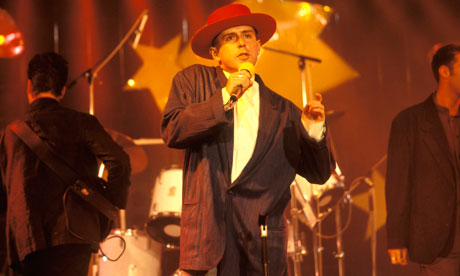
Holly Johnson from Frankie Goes to Hollywood
Holly Johnson performing with Frankie Goes to Hollywood in 1980. Photograph: David Redfern/Redferns
When the legendary producer Trevor Horn first saw Frankie Goes to Hollywood on the 80s TV show The Tube he was intrigued, though, he says, he did think their performance was very sexist. After hearing them again, doing a live session of Relax on the radio, he was convinced they had something special. "It was quite a different version of the track, but Holly [Johnson] was a good singer. And then we discovered nobody wanted to sign them – mainly because they were pretty hardcore gay. Their pictures were … their bums came through their trousers and there was a guy with a knife instead of a penis."

"Even the guys who weren't gay were pretty hardcore," adds Horn's longtime collaborator Steve Lipson.
Horn, however, wasn't put off by the bands risqué image, and signed them to his new label, ZTT, in 1983. What no one had told him was that the band he signed wasn't the same band that played on the demos he'd heard. The guitar player had left just two weeks before. No problem – Horn put together a session band of his usual collaborators, including Lipson, to record the backing tracks.

"The Frankies were very affable about it," shrugs Horn. "We played them a mix where we'd put an audience track on it, telling them: 'This is you playing at Madison Square Garden.' They laughed and declared: 'We're fucking great!'

"As time went by they started to play. They started to get better, but just as they got to a place where they could play their own music they fell out. They fell out in a way that they've never been able to fix up ever since. I remember backstage at Wembley, when Holly [Johnson, the singer] had a bodyguard in case Mark [O'Toole, the bassist] tried to kick him."

By the time they recorded their second album, Johnson was largely absent from the studio, Lipson says. He even said he'd need two days' notice if they wanted him there. Soon after, the band members went their separate ways, but one of the tracks they'd recorded but not released became a worldwide hit – albeit with a different artist, who herself was not adverse to controversy.

Grace Jones's million-selling record Slave to the Rhythm created a whole new sound for her – a sound many others tried, and failed, to emulate. Creating it was an arduous task, however (though not for Jones, who, according to Lipson, showed up for as many hours as the number of months he and Horn worked on the record: nine).

Though the track eventually spawned a concept album, featuring different interpretations of the track, it was only brought to the attention of Chris Blackwell, the owner of Jones's record label, Island, when he was looking for a single for her greatest hits album. Horn dug up a track Bruce Woolley had written for Frankie Goes to Hollywood.

"The original recording had a very Germanic beat, and it was pretty obvious it wasn't going to work for them," says Horn. "I thought that if it was called Slave to the Rhythm it should be a better rhythm – and the only rhythm I could think of that was good enough was Go-go music, which was really happening at the time.
"It was such a daft idea when I look back on it. We had a band of really great Go-go musicians: some people from Experience Unlimited, some from Trouble Funk … and they could all really play – but nobody could remember an arrangement. In fact, they were baffled by the idea of an arrangement. They just started, kept going and then they stopped."

And they'd all play together all the way through, with all instruments leaking into the drum microphones. "At one point the guitar player went to the toilet for about two or three minutes, and that ended up being the only time we had the groove without the guitar all over the drums," says Lipson. "That was our window of opportunity to make a loop out of that little bit and make a rhythm track out of it."
"Story of our lives," sighs Horn.

Horn had recorded the bits he liked on his cassette player and played it for Woolley, who swiftly rewrote the song over it. "I loved it when he played those chords at the start," Horn reminisces. "We left the studio went back to the Parker Meridian hotel with a load of equipment, went upstairs and finished the song. Literally, the first day we got everything out of that Go-go band we were ever going to get."

Whether it's waiting for an artist to come into the studio with a new "girlfriend" at 2am, after a night out, to be able to record their vocals or playing all the instruments on the record because the band can't play, Horn and Lipson have spent far, far more time in studio than any of the artists they worked with, perfecting their records.

"I was having a conversation with an old rock star, who shall remain nameless, a couple of weeks ago in the kitchen at Sarm [Horn's studio]," Horn says. "He was talking about how they spent a year making a record and how they all got completely wasted. He said: 'But you know all about that – you got wasted and took ages over things.' I shook my head, and said: 'I took ages over things but they were generally successful – and I was working, not getting drunk.'"

Behind the music: how to make a singer sound great

Badge Music BlogSuper-producers Trevor Horn and Steve Lipson on the subtle art of coaxing an outstanding performance from a singer

When technology companies say artists should view recorded music as a promotional tool and make their living by touring, they forget that making records is almost always a group effort. The person who pulls it all together is the producer. Now, three legendary producers have decided to come out of the shadows, releasing an album and touring under the name of, you guessed it, the Producers.

The supergroup – Trevor Horn, Steve Lipson and Lol Creme, along with session drummer Ash Soan – have over the last 40 years racked up more than 200 hit singles and albums between them. Creme, one half of Godley and Creme and a quarter of 10cc, directed some of the most famous 80s videos, including Frankie Goes to Hollywood's Two Tribes. Horn's discography reads like the soundtrack to our lives. A member and producer of Buggles (Video Killed the Radio Star), the Art of Noise and Yes, he produced some of the most groundbreaking records of the past three decades, including Frankie Goes to Hollywood's Welcome to the Pleasuredome and Grace Jones's Slave to the Rhythm, as well as albums by Seal, tATu, Pet Shop Boys and Robbie Williams. Steve Lipson was Horn's right-hand man in the 80s and has since then produced Jamie Cullum and Paul McCartney.

Horn, we learn, is not a fan of Auto-Tune. "There used to be a lot more people who sang out of tune [before Auto-Tune], and there was something quite interesting about that," he says. "Nobody gave a damn back then, because you were used to everything being a little bit out of time and a little bit out of tune. The generic sound of this generation is thin little voices perfectly in tune."

That's not something, though, that Seal can be accused of. But Horn was not impressed the first time he heard him. His wife (and business partner) had been looking for a modern-day Nat King Cole and claimed she had finally found him. She played him the demo of Crazy. "I liked the line, 'We're never going to survive unless we get a little crazy,' but for some reason Seal had put a phaser on his voice and I thought: 'He doesn't sound that good.'"

Still, Horn decided to meet him. "He's an imposing-looking fellow – 6ft 7in. He said: 'Can I play you something I've just written?' He put a cassette in and it was the backing track to Violet. He started: [Horn sings] 'Ooh, I see you comb your hair in different light/ Change the chair and seem to think it's alright.' He was singing it into my ear and I got goose bumps all the way up my back. I said to my wife: 'I've got a musical hard-on.'"

He says he's a great believer in not crowding musicians or jumping on them too quickly – it makes them "turn off" – instead he gives them breathing space. "If you use good people, what comes naturally is what you want," he explains. "And it never, ever helps to lose your temper."

Lipson's tip is to beware of the "the big moment" when recording vocals. He used to produce the American Idol winners' singles, each of them recorded by the four finalists in LA. "I'd have them for two hours. They'd come into the control room. We'd sit and talk for about an hour and 50 minutes. I'd keep an eye on the clock and then they'd go in and do two takes. It worked every time."

"I never used to organise vocal session with Seal, because if I did he wouldn't be there," Horn says. "I'd stay in the same house with him and he'd come back at about 2am. If he brought a girlfriend [into the studio] it was always a great moment. Seal would sing the song to them. I'd say: 'Give me black Elvis,' and he'd do the moves. Robbie [Williams] used to like to have somebody to sing to, too."

For his second album, Seal tried a few other producers before coming back to Horn. "One of them phoned me up, asking: 'How do you get him in the studio? He's been gone for two weeks.' I said: 'He probably doesn't like the tracks, and just hasn't told you. I used to live with him. That's the only way I could get him.'"

He dispels the myth of the tyrant producer. "You're a hired hand. You don't have that much power. If you had a contract that said somebody's got to sing and they wouldn't, and you went to court, you would lose.

They'd say: 'I don't want to sing for him because I don't feel happy singing,' and there would be nothing you could do about it."

Next article: the secrets behind some of Horn's and Lipson's biggest records

Behind the music: What do record labels actually do? You'd be surprised

Badge Music Blog

For all the cynicism about money-grabbing majors, labels still offer artists the security they need to produce their best work


Thursday 2 February 2012 08.12 EST  
 
Ed Sheeran, London
In good company … Songwriters such as Ed Sheeran prefer the help of labels. Photograph: Hayley Madden/Redferns
In the thread beneath one of my most recent articles about the 2012 report on digital music from the International Federation of the Phonographic Industry, StevieBee123 asked: "Sorry – what exactly do we need record companies for again?" LawlessGreed replied with a question of his own: "If there is no music industry, how are musicians supposed to earn a living from their work?" to which malcolm replied: "Try, ehhh, selling direct to the pubic … no brainer!" That discussion, as well as one I had on Twitter has highlighted a certain confusion regarding what today's record labels actually do.

It's true the internet has been brilliant for artists in many ways, giving them an alternative route to make contact with and sell directly to fans, but record labels do much more than distribute to retailers. I recently spoke to Ed Sheeran's producer, Jake Gosling (more of which will appear in next week's Behind the Music), and asked why Sheeran had decided to sign with Asylum/Atlantic, part of Warner Music Group. After all, by working extremely hard for years the two of them had been able to record numerous EPs on their own, get to No 2 on the iTunes charts with one of them, get millions of hits on his SBTV video for You Need Me as well as win some support from Radio 1 and 1Extra – all without the help of a record label.

"What Ed and I had done without a record company had proven to the label that we could do it on our own, that all we needed was help and support and finance, getting us to more people and being able to pull the strings when needed to get us on a TV show – those moves are harder to do when you're a bit more independent," Gosling explains. This also led to the label taking quite a hands-off approach when it came to the recordings, as Gosling and Sheeran had proved what they did already worked.

There's also something to say for local expertise. I may have understand how the UK, US and Swedish music scenes work, but I know little about the industry in mainland Europe. Though Fleet Foxes decided to sign with SubPop for the US, Simon Raymonde managed to convince them to sign with his label, Bella Union, for the rest of the world, because he had people all over Europe who could work the record in individual territories. Judging by their success in Europe, they made the right decision.

It's also simplistic to say majors are evil while indies are good. What is important is to be on a label that "gets you". "There is a really cliched view out there about record labels," Gosling says. "I can't speak for every label or A&R man, because there are those who will suck the life out of a project, but particularly with Asylum, it was a really good experience."

Recently Azealia Banks went from indie to major and signed with Universal after complaining about her treatment by XL Recordings. I'm sure there are two sides to the story, but whatever those are it's clear that she and XL just weren't a good match for each other.

Over the past decade labels have realised they're not the only game in town and they have to justify their existence. Sure, there are still some of the old guard sitting at the top of the majors, but they all have young online promotion and social media departments (actually, age has little relevance – Martin Mills, the head of Beggars Group, is in his 60s and goes to gigs several times a week).

For artists such as Sheeran and Banks, who have managed to gain a fanbase before being approached by labels, record deals tend to be much more advantageous than the old type of contracts. Some artists retain ownership of their music and some, as in Sheeran's and Labrinth's case, get their own label imprints.

I used to be signed to a major publisher (I signed to BMG, which was later bought by Universal), and though – like most artists – I've had my issues with it through the years, I'm grateful for the opportunity it gave me. I can only imagine walking into a bank asking for a £100,000 loan, saying: "I'd like to use it to pay my living and work expenses for the next four years, so that I can develop my craft by being able to write full-time and work with songwriters all over the world. You'll make it back from the royalties the songs I write during those years will accumulate. And if you don't, I don't have to pay that money back. What? You need some kind of guarantee? Just listen to these new songs I've written." They'd laugh me straight out of the door.
But BMG signed me purely on the belief my songs were good enough to recoup their investment.

Incidentally, they did make it back, and now we split the royalties with me getting more than they do. Universal Publishing even eventually agreed to give me back the songs written during my deal but had not been releasedby the time we parted ways.

The public sees the artist and hears the music, but what they don't see is the whole world of people doing things behind the scenes to help them, Gosling says. "You still need labels. You've got to remember they've got marketing teams, press teams, radio pluggers, accounts departments and when you get bigger you need help with that stuff. You need a good team around you. OK, maybe you could hire those people yourself and set up your own label, but there's something to be said for deciding that you want to make music and be creative, and I don't want the hassle. You can be really creative but not very good at business and marketing. For example, I don't know what Leonard Cohen's business acumen was like."

Even Neil Young, an artist known for taking an anti-corporate stance, recently sang the praises of record companies, when interviewed at a media conference. "What I like about record companies is that they present and nurture artists," he said. "That doesn't exist on iTunes, it doesn't exist on Amazon. That's what a record company does, and that's why I like my record company. People look at record companies like they're obsolete, but there's a lot of soul in there – a lot of people who care about music, and that's very important."

So, what about those artists who complain about the labels? "Those artists should go by themselves," concluded Young. "They have a choice of what they can do. Artists who want to go it alone should just do that."

Why singles sales aren't the good news the music industry claims

Badge Music BlogSingle tracks might be more popular than ever, but it's albums that make money – and sales of full-lengths continue to slump

Emeli Sandé debut is a rare success story in a world of shrinking album sales.
Broken records … Emeli Sandé's debut is a rare success story in a world of shrinking album sales. Photograph: Chuck Cook/Invision for Essence
Riding on the back of a sport-based feelgood factor (Andy Murray, the cricket, Chris Froome's yellow jersey in the Tour) comes the claim that 2013 is set to be the biggest year ever for single sales in the UK. Hurrah. Champagne all round. Well done, Team GB MP3.

Monstrous digital hits such as Daft Punk's Get Lucky (which took just 69 days to reach 1m sales) and Robin Thicke's Blurred Lines (currently closing in on similar figures) were cited this week by the Official Charts Company as having helped boost single sales at the half-year mark by 2.5% compared with the same period last year.

It's heartwarming stuff for a record business that has been mired in bad news since the millennium – but against the boom in singles, the album (where the real profit margins lie for labels) is not quite in such rude health. Heavy hitters such as the Now That's What I Call Music compilations and Emeli Sandé's seemingly inexhaustible debut might chalk up the numbers, but the reality is that the flourishing of the singles market comes, partly, at the expense of the album.

In 2003 – before digital made an impact on legitimate sales – a total of 30.8m singles were sold in the UK, with the CD single being the dominant format. In the same year, 157.2m albums were sold. Fast forward to 2012 and the story is very different. A total of 188.5m singles were sold in the UK last year (of which 99.6% were digital) – equal to a sixfold increase in under a decade. Album sales, however, stood at just over 100m (30.4% digital), meaning they have shrunk by a third in the same period.

Singles were first to see a significant transfer of sales to digital formats in the UK. Downloads first showed up in the British Phonographic Institute's annual sales figures for 2004 (5.7m sales, or 17.9% of the total) but albums didn't make a digital appearance until two years later (2.8m sales – just 1.4% of the total). Digital has totally revived the singles market and brought it to dizzying new sales heights, but this is still not happening in the albums market. Digital album sales may be growing, but overall sales continue to nosedive.

The obvious reason for this is the way digital formats – or more specifically iTunes, when it arrived in the UK in 2004 – allowed for the unbundling of the album. Consumers could just buy the track (or tracks) they wanted, causing a locust effect on album sales. The single, as in the 1950s, became a key currency again.
Other forces are at play here too – namely pricing and mobile usage – helping to swell single sales but also continuing to make trading conditions for albums more perilous. To download a single today costs anything from £0.59 to £0.99, or even cheaper if there's a promotion on, whereas a decade ago the average price of a single was £3.21. A digital album today costs just twice what a single cost in 2003, without even factoring in inflation – but singles remain the big draw for consumers.

At the same time, Smartphones have dramatically changed music buying. In a few taps and in as many seconds, you can download music straight to your device, finally making "impulse purchasing", something the record business pinned its hopes on years ago, a reality. The Shazam app, through which users can hear a song playing, tag it on their phone and click through to buy it before even getting to the chorus, also makes purchasing a far slicker experience. It clocks up 10m tags a day globally and around 10% of those end in a purchase.

Labels can boast about their deft marketing of singles all they want, but really it's technology and price that have conspired to turn us into frantic singles buyers.

But that's still only part of the story about the way music is now consumed. The UK chart is entirely sales-based, so it does not include streams on services such as Spotify (which recently made its play counts public) or YouTube. Other markets (such as Sweden and the US) have woven streams into their charts but the UK chart, for now, remains uncombined.

Therefore, any cheering about booming singles sales, to make this a truly British story, requires some concurrent moaning and doom-mongering: in the first half of the year in the US, Nielsen SoundScan reports that digital track sales dropped 2.3% year-on-year to 682.2m units. The US properly took to digital before the UK (iTunes launched there in 2003), and what happens across the pond often stands as an indicator of what will eventually happen here. Even if 2013 looks set to break all sorts of records, next year or the year after, the record business's lifeline could soon start to fray.

Behind the music: Is the A&R era over?

Badge Music Blog
Is A&R dead? Consider what happened at a recent meeting between an artist manager and a major label A&R. The A&R commented that he liked the artist's demo; she looked great, had a great voice and he definitely saw potential for success. When he was told that the artist would need some flexibility as she was dealing with a serious illness in the family, the A&R exclaimed: "Put her up for The X Factor – she's guaranteed to be in the final 12!" He implied that he would sign her, eventually, if she did just that (contestants are not allowed to have a record deal before entering the competition). The artist declined.

Adele
Though it's never been easy to get a record deal, this particular meeting depressed the manager more than usual. Digital Music News recently reported that there's been a big cull in A&Rs at record labels in recent years, and if the aforementioned meeting is a sign of the lack of imagination among them, it's understandable. It used to be that the A&R's role was to spend their evenings in smoke-filled clubs discovering bands, and helping them to develop before releasing their first record (the Wikipedia entry says: "Artists and repertoire (A&R) is the division of a record label that is responsible for talent scouting and overseeing the artistic development of recording artists"). These days, however, major labels increasingly demand that artists already have a "momentum" going before they get involved.

According to Hartwig Masuch, the CEO of music publisher BMG Rights, the days of A&R are numbered as artists are now able to make and market their own music via the internet. I think his view is simplistic. It's true that the internet has taken away the middleman, allowing artists to get their music out there without record company promotional power. Yet artists often encounter difficulties getting heard above millions of others fighting for the listener's attention. A&R acts as a filter. To most artists, their songs are their babies, which makes it pretty difficult to discard them or look at them objectively. Good A&Rs can, so they push artists further.

Major labels may be reinventing the role, but A&R is still alive and kicking at – and even essential to – independent labels. I wasn't in the room when Adele first met Richard Russell, CEO of XL Recordings, but I have a feeling The X Factor wasn't included in the conversation. Russell later said: "To me, signing is instinctive. The more I think, the worse it gets. I'm not signing people for who they are, but for their potential. I have to believe in the person." It appears to be a recipe that works – Adele's first album had great success all over the world and her second is currently outselling the rest of the top 10 combined in the UK (it's currently No 1 on the iTunes charts in 16 countries). Compare that to the vast majority of X Factor contenders.

Independent labels aren't the only ones investing in the development of new artists. Music publishers have provided vital support for numerous unsigned artists for a long time. A&R Caroline Elleray signed both Coldplay and Keane to BMG Music Publishing years before they got record deals, paying for recordings and shopping them relentlessly to labels. This kind of loyalty and belief is also characteristic of Chrysalis Music. When Nerina Pallot was dropped by Polydor after her first album, Chrysalis supported her for years, invested in her follow-up and released it through their "incubator" record label, Echo.

The future role of major labels may be more of a multiple service provider, offering investment and marketing for artists that have gained modest to medium success on their own but want to make a greater impact. Meanwhile, for budding artists who don't want to take part in televised talent shows, there are still some labels, publishers and managers out there who believe that talent will out and are willing to invest time and money – even if their funds are, unfortunately, more limited.

Monday, September 9, 2013

DJ: his role in promoting your music

Dj as a pool member and his role in promoting your music

Nightclub djs must report their club responses to your music to the pool director, generally, between 2-4 weeks. Each dj compiles his own club response report, which he then turns in to the pool director.

The pool director then compiles a final report from each djs report, and provides you with a copy. This report generally includes each club`s listing, address, the response rating to your music, along with an overall average score. You can then use your report as influence to obtain more radio airplay, press coverage, distribution deals, and more.

Now, in addition to having a completely different version of your song(s), you also have another version of the song(s) that you can sell at retail if you wish and, as the saying goes, ‘getting two bangs for your buck’ as a certain number of people will also be interested in your enhanced club version.

An added and peripheral benefit of having a club version of your music is that a number of record pool djs also have specialty or mix shows on stations in their area or, they may even be a part of the main staff on their area stations.

Thus, should a nightclub dj really like your music, and is not simply fulfilling the obligation to play your music in his club, it is very likely that you will begin receiving airplay on his area station as well.

One final note is that radio and retail work very closely within their own local and regional areas, with each apprising each other of what is getting response from listeners, and what is being asked for at retail, respectively. This is why it is vitally important that you are set up with offline retail distribution services.

Now, when you begin the radio promotion and press publicity aspects of your marketing campaign, they can merely serve as ‘icing on the cake’ as opposed to being the only driving factors you have to make the public aware of your music.

In fact, with now including record pools within your marketing, and being able to provide proof to both radio and press of your music`s club response, you are likely to experience much easier access to the media which is a very beneficial and important thing to do.